
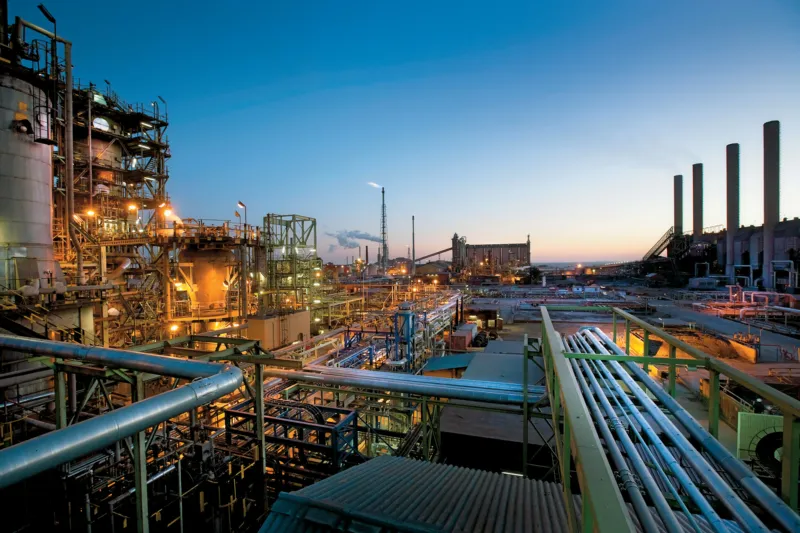
Post-combustion capture removes CO2 from flue gas after fuel is burned. Amine solvent systems are the most mature option and can be added to existing plants, which makes them attractive for hard-to-abate industries.
Key takeaways
- Amine capture absorbs CO2 from flue gas and releases it in a regenerator.
- Steam for solvent regeneration is the main energy cost.
- Flue gas pre-treatment and CO2 compression are significant parts of the plant.
How it works
Cooled flue gas passes up an absorber column where a solvent absorbs CO2. The rich solvent is heated in a stripper to release nearly pure CO2, and the lean solvent returns to the absorber. The CO2 is then dried and compressed for transport and storage or use.
What drives cost
- Flue gas volume and CO2 concentration
- Steam and power availability on site
- Impurities such as SOx, NOx and dust
- Compression pressure and transport route
- Available plot space near the stack
Engineering priorities
Early studies should focus on integration: where steam comes from, how cooling water is supplied and where the capture unit fits. These decisions often matter more than the choice of solvent.