
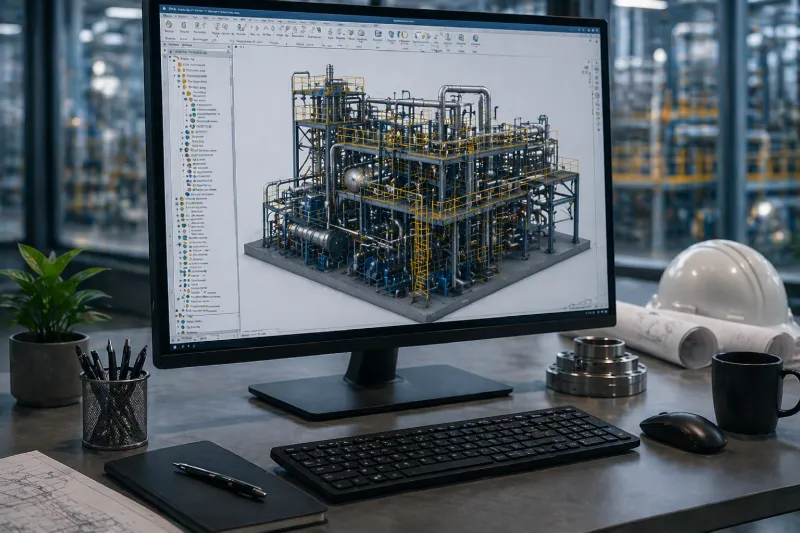
One team, every discipline
How each engineering discipline contributes to CAD Automation — coordinated through one lead engineer, one model and one document register.
- 6Disciplines
- 1Integrated model
- 4-levelChecking
Process
Automates repetitive process documentation tasks.
Key deliverables
- P&ID data extraction
- Line list generation
- Tag consistency checks
- Data sheet population
Piping & Layout
Speeds up piping design and deliverable production.
Key deliverables
- Isometric automation
- MTO extraction
- Spec and catalogue tools
- Model data validation
Civil & Structural
Automates structural modelling and drawing tasks.
Key deliverables
- Parametric structure generators
- Drawing annotation tools
- Steel MTO extraction
- Standard detail libraries
Electrical
Automates electrical schedules and drawings.
Key deliverables
- Cable schedule generation
- Load list tools
- Drawing numbering
- Template-based layouts
Instrumentation & Control
Automates instrument documentation.
Key deliverables
- Loop diagram generation
- Instrument index sync
- I/O list tools
- Hook-up drawing automation
Software Development
Builds, tests and supports the plugins on your platform.
Key deliverables
- AutoCAD / E3D / SP3D add-ins
- Excel and database connectors
- Testing and documentation
- User training and support
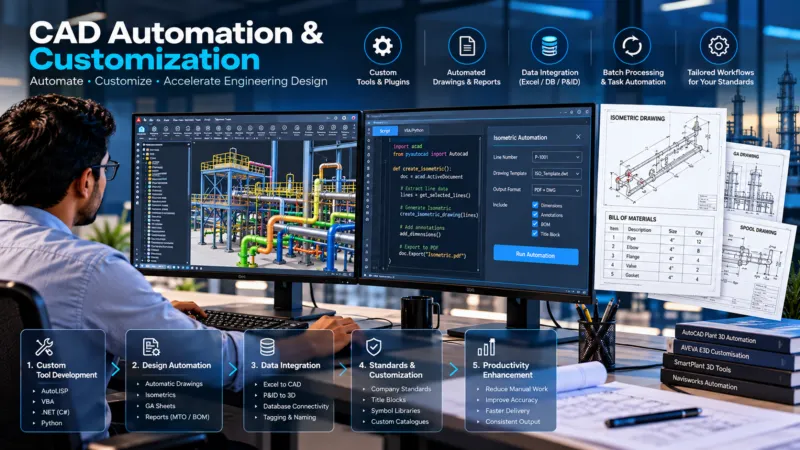
CAD automation services
Native add-ins, scripts and toolsets for AutoCAD, Plant 3D, Inventor, Navisworks, AVEVA E3D, SP3D and Tekla.
- Custom CAD plugin development
- CAD standards & template development
- Workflow automation
- Batch processing, data extraction & reporting
- Model validation tools
- System integration
- Licensing & deployment
- Legacy CAD optimisation
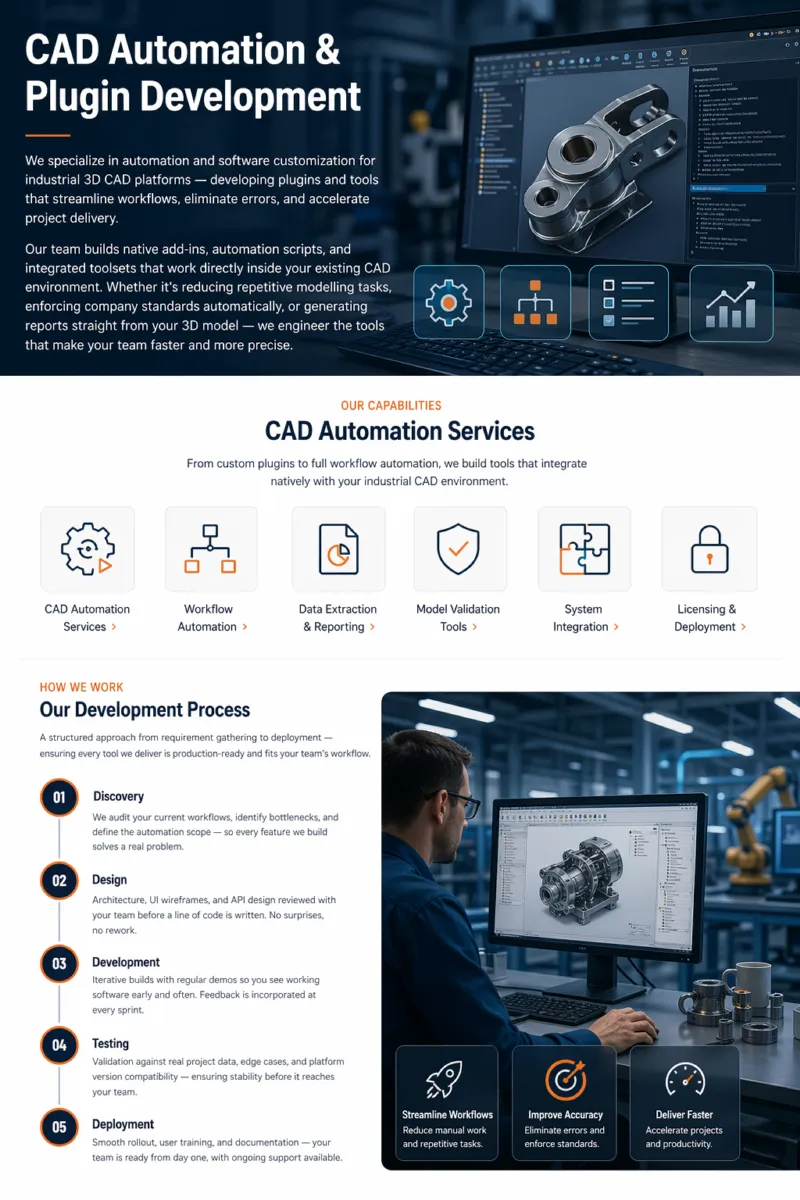
Our CAD customisation process
A six-step process that takes you from requirements to supported, deployed tools.
- Requirement analysis — we assess your current workflows, challenges and business requirements
- Workflow mapping — we identify inefficiencies and opportunities for automation
- Custom development — tailored plugins, scripts and tools aligned with your goals
- Testing & validation — rigorous testing for performance and accuracy
- Implementation — deployment plus training for seamless adoption
- Ongoing support — updates and enhancements as your needs evolve
AI implementation in plant design
We bring the latest AI models into everyday plant design work — not as a separate tool, but connected to your 3D models, P&IDs and engineering databases. The result is faster design, fewer errors and engineers freed to focus on engineering.
- AI-assisted P&ID digitisation — convert scanned and legacy drawings into intelligent, tagged data
- Automated model QA — AI flags clashes, missing supports, spec breaks and standards violations
- Generative layout and auto-routing options for equipment and piping
- Engineering copilots that draft data sheets, specs and reports from project data
- Document intelligence — search and summarise vendor documents, codes and TQs
- Predictive MTOs and estimates learned from your past projects
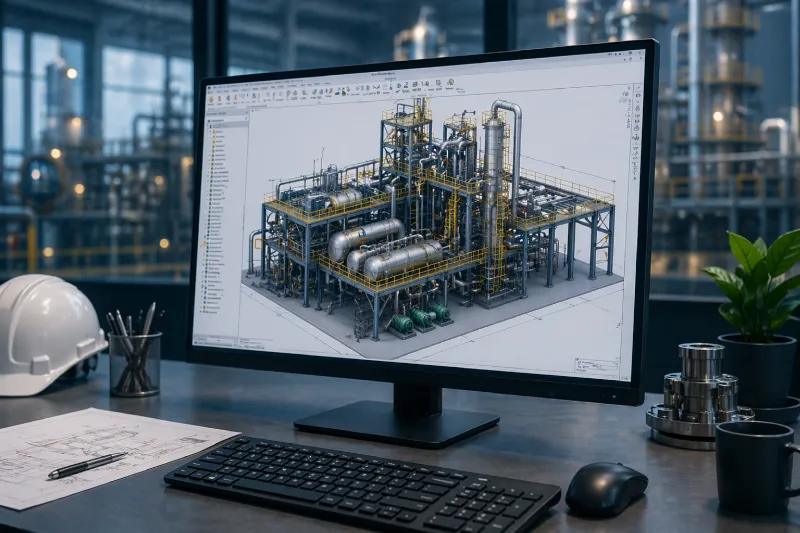
From pilot to production
AI only adds value when it is safe, accurate and trusted by engineers. We follow a practical path that starts small, proves value and scales — keeping your data secure and every result reviewed by a qualified engineer.
- Use-case discovery — find the tasks where AI saves the most hours
- Data readiness review of drawings, models and databases
- Secure deployment on-premise or in your private cloud; your data is not used to train public models
- Human-in-the-loop validation for every AI-generated output
- Integration into AVEVA E3D, SmartPlant 3D, AutoCAD Plant 3D and document systems
- Measured results — hours saved, errors avoided and adoption tracked
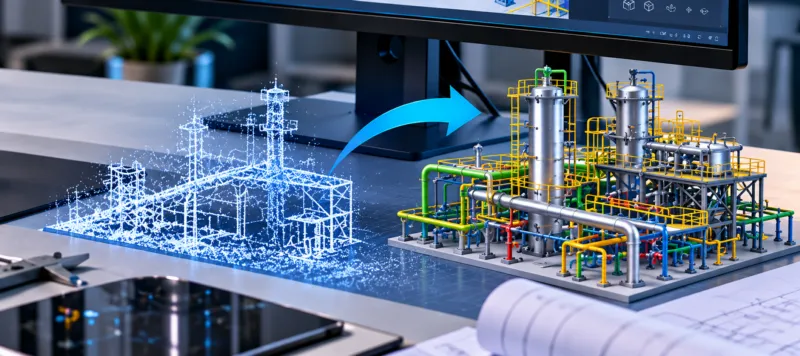
Designing the plants of the future
The next generation of plants will be designed, built and operated as data. Intelligent models created during engineering become digital twins that support operations, maintenance and continuous improvement for the life of the asset — and they will be designed for low-carbon fuels, flexible operation and autonomy from day one.
- Data-centric engineering — one source of truth from FEED to operations
- Digital twins linked to live plant data for monitoring and optimisation
- Autonomous and remote operations supported by AI and advanced control
- Designs ready for hydrogen, carbon capture and electrification
- Predictive maintenance built into the asset information model
- Modular, standardised designs generated and checked by automation
Frequently asked questions
Do you provide custom plugin development for specific requirements?
Yes, we develop fully customised CAD plugins tailored to your unique business needs. Whether you require automation, advanced features, or system integrations, our solutions are designed to enhance your existing CAD environment.
Which CAD software platforms do you support?
We work with a wide range of CAD platforms, including AutoCAD, Plant 3D, Inventor, Navisworks, AVEVA E3D, SP3D and other industry-specific tools. Our expertise spans APIs, scripting, and plugin development.
Can you automate our existing CAD workflows?
Yes. We analyse your current workflows and identify areas where automation can improve efficiency. Our solutions can automate repetitive tasks such as drafting, data extraction, file processing, and reporting.
How long does a CAD customisation project typically take?
The timeline depends on the complexity and scope of the project. Smaller customisations may take a few days to weeks, while more advanced solutions or integrations may take several weeks. We provide a clear timeline after understanding your requirements.
Will CAD customisation affect our existing data or projects?
No. Our process ensures that your existing data remains secure and unaffected. We follow best practices for testing, validation, and backup to ensure smooth implementation without disrupting ongoing projects.
Do you provide support and maintenance after implementation?
Yes, we offer ongoing support, updates, and maintenance services to ensure your customised solutions continue to perform efficiently as your business evolves.
How do we get started with CAD customisation services?
Share your requirements or challenges with our team, and we will evaluate your workflows, suggest suitable solutions, and provide a tailored implementation plan.
How can AI be used in plant design?
AI can digitise legacy P&IDs, check 3D models against design rules, suggest layout and routing options, draft data sheets and reports, and search large sets of vendor documents and codes. We integrate these capabilities into the CAD and document tools your team already uses.
Is our project data safe when using AI?
Yes. We deploy AI solutions on-premise or in your private cloud with access controls, and we configure them so your data is not used to train public models. Confidentiality agreements and your IT security policies apply throughout.
Will AI replace our engineers or designers?
No. AI handles repetitive, rule-based work and first drafts. Every output is reviewed and approved by a qualified engineer, so your team spends more time on engineering decisions and less on routine tasks.
How do we prepare our plants for the future?
Start with good data: intelligent 3D models, consistent tagging and a structured handover (for example to ISO 15926 or CFIHOS). This creates the foundation for digital twins, predictive maintenance and AI-driven operations later in the asset life.
Ready to start your next project?
Share your requirements and our engineering team will come back with a tailored proposal.
- ISO 9001:2015 Certified
- Offices in USA & India
- Codes & Standards Compliant