One team, every discipline
How each engineering discipline contributes to Feasibility Studies — coordinated through one lead engineer, one model and one document register.
- 7Disciplines
- 1Integrated model
- 4-levelChecking
Process
Defines the process concept, capacity and configuration options, and runs the heat and material balances every other discipline builds on.
Key deliverables
- Block flow diagrams per option
- Preliminary H&M balances
- Utility and chemical demand estimates
- Technology and licensor screening
Piping & Layout
Turns each concept into a plot plan so footprint, spacing and constructability can be compared fairly.
Key deliverables
- Concept plot plans
- Equipment spacing to API / NFPA
- Tie-in and pipe rack routing concepts
- Brownfield space studies
Mechanical (Static & Rotating)
Sizes the major equipment and flags long-lead items that drive schedule and cost.
Key deliverables
- Major equipment lists
- Preliminary sizing
- Long-lead identification
- Vendor budget enquiries
Civil & Structural
Assesses the site, soil and foundation concept to firm up civil quantities early.
Key deliverables
- Site and soil data review
- Foundation and structure concepts
- Earthwork and drainage concept
- Civil quantity factors
Electrical
Establishes load, power supply and substation options that are often a hidden cost driver.
Key deliverables
- Preliminary electrical load list
- Power supply / grid options
- Single line concept
- Substation location study
HSE & Process Safety
Identifies major hazards while options are still open and changes are cheap.
Key deliverables
- Concept HAZID
- Layout safety and siting review
- Environmental screening
- Risk register per option
Project Controls & Estimating
Converts the options into comparable CAPEX, OPEX and schedule for a go / no-go decision.
Key deliverables
- AACE Class 5 / 4 estimates
- OPEX models
- Level 1 schedule
- Economic comparison matrix
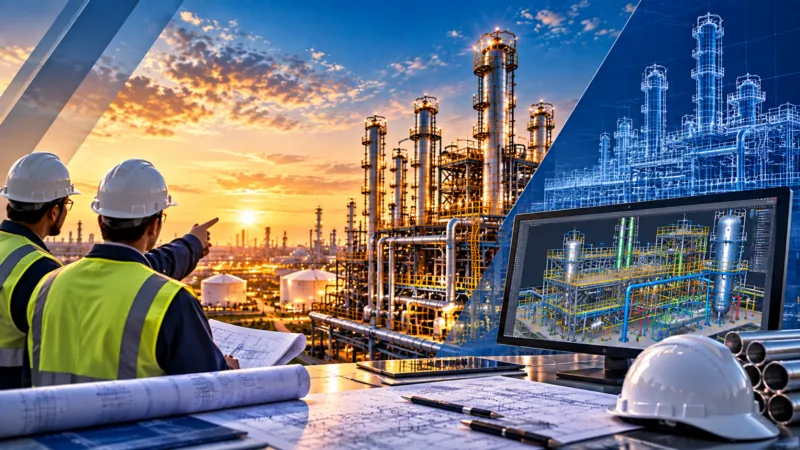
Technology & concept selection
Alternative process routes, plant capacities and configurations are developed and ranked against CAPEX, OPEX, yield, energy consumption, HSE and operability criteria using a weighted decision matrix.
- Design basis: feed and product specifications, capacity, turndown and on-stream factor
- Licensor / technology comparison and selection
- Block flow diagrams (BFDs) and preliminary heat & material balances
- Utility and chemical consumption estimates
- Weighted option evaluation and recommendation
Site, layout & risk definition
The preferred concept is developed further to confirm technical and commercial viability and to identify the risks that could change the investment case.
- Preliminary process flow diagrams (PFDs) and major equipment list
- Plot plan options with spacing to API 752/753 and NFPA guidance
- Utility, tie-in and infrastructure assessment for greenfield or brownfield sites
- HAZID workshop and preliminary environmental aspects
- Permitting and regulatory requirements review
- Project risk register and mitigation measures
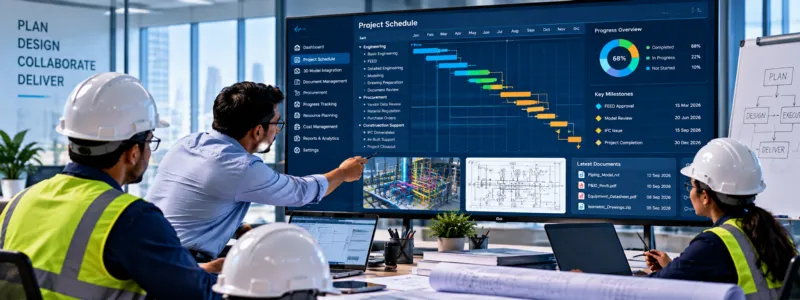
Class 5 / Class 4 estimates
Capital cost is built from equipment-factored and capacity-factored methods, calibrated against in-house and published benchmarks, with contingency derived from the risk register.
- AACE Class 5 (−50% / +100%) and Class 4 (−30% / +50%) CAPEX estimates
- OPEX estimate: utilities, chemicals, catalysts, manpower and maintenance
- Level 1 milestone schedule and execution strategy
- Sensitivity analysis on key cost and economic drivers
- Study report, decision support package and FEL-3 (FEED) scope of work
Frequently asked questions
What is the difference between FEL-1 and FEL-2?
FEL-1 (screening) compares several broad concepts quickly to select the most promising ones. FEL-2 (feasibility / concept selection) develops the preferred option to confirm technical and commercial viability and prepares the basis for FEED.
Which estimate classes do you use?
We follow AACE International 18R-97: Class 5 for screening (typically −50% / +100%) and Class 4 for feasibility (typically −30% / +50%). The accuracy range, basis and exclusions are always documented.
Do you perform process simulation at the study stage?
Yes. Heat and material balances are developed with steady-state simulation (for example Aspen HYSYS or Aspen Plus) so that utilities, equipment sizes and costs are based on consistent process data.
Can you evaluate licensed technologies?
Yes. We compare licensor offers on yield, utilities, catalyst and chemical consumption, CAPEX, references and commercial terms.
What input data do you need?
Feed and product specifications, target capacity, site and utility information, applicable codes and any previous studies. Where data is missing, we propose documented assumptions.
Ready to start your next project?
Share your requirements and our engineering team will come back with a tailored proposal.
- ISO 9001:2015 Certified
- Offices in USA & India
- Codes & Standards Compliant